I recently spent time looking back through old ChatGPT conversations, trying to remember how we’d solved a particular problem. Eventually, I found the answer—but it struck me that I’d already paid the cost of figuring it out once. So why was I paying it again?
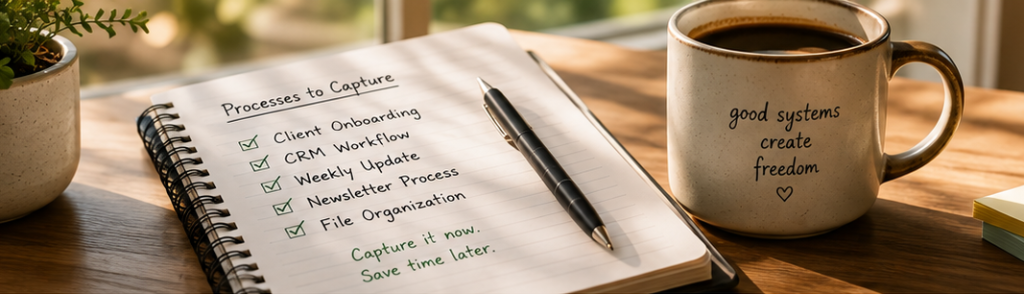
That experience made me rethink the way I approach Standard Operating Procedures (SOPs). For a long time, I assumed SOPs were something you sat down and wrote once your business or organization was running smoothly. A project for “someday,” when there was more time.
Lately, I’ve realized I had it backwards. The easiest time to document a process isn’t months later—it’s the moment you’ve finally figured it out.
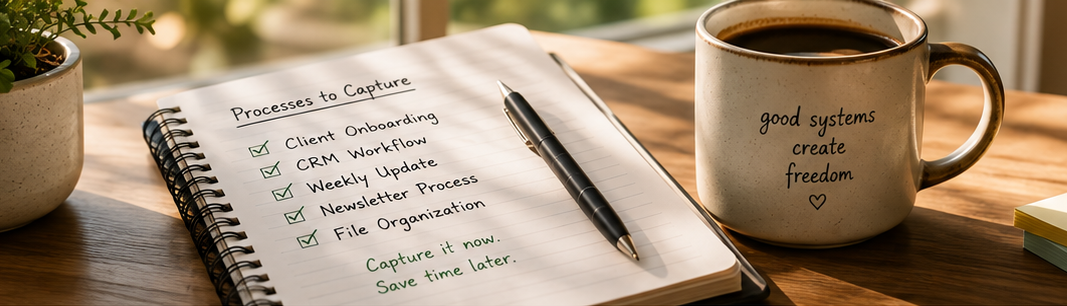
Over the past few months, I’ve caught myself doing exactly that. We finally worked out a standard client onboarding process, so before moving on to the next project, I turned it into a template. After refining my CRM workflow, I documented the steps while they were still fresh. More and more, whenever I find myself thinking, “Whew… we’ve finally figured that out,” I know it’s time to spend five more minutes writing it down.
I’ve discovered that the best time to document a process is immediately after you’ve improved it. When we wait until later, we forget the little details. We lose sight of why we made certain decisions. What could have been a five-minute note turns into an hour of trying to reconstruct what happened. Documentation isn’t about creating binders full of procedures. It’s about capturing today’s hard-earned learning so tomorrow starts one step ahead.
I’ve learned not to dismiss those little moments of hesitation. They’re rarely just about a missing file or an outdated spreadsheet. They’re signs that something could be made simpler.
Good systems aren’t about bureaucracy. They’re about respecting the time, energy, and experience it took to learn something in the first place. Over time, something remarkable happens. Those individual notes become checklists. Checklists become templates. Templates become Standard Operating Procedures. And before you know it, you’ve built a library of organizational knowledge that provides consistency, continuity, and confidence—whether you’re welcoming a new employee, onboarding a volunteer, or simply picking up a task you haven’t done in six months.
I’ve come to believe that SOPs aren’t really a project. They’re a by-product of learning. Each time you take a few minutes to capture a lesson while it’s still fresh, you’re investing in your future self, your team, and your organization.
So here’s a simple habit I’ve been trying to adopt. Whenever I catch myself saying, “We’ve finally figured this out,” I don’t move on to the next task just yet. I take five more minutes. I write it down.
Try it. Your future self will thank you.